

























































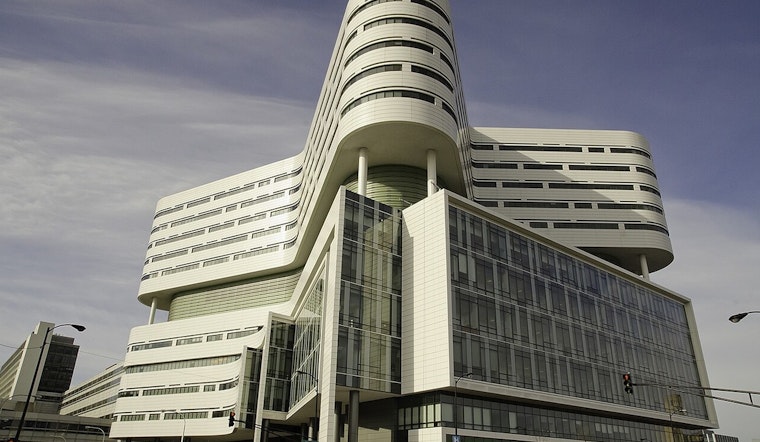
The Smith family has dropped a multimillion-dollar, record-breaking gift on Rush University’s MD Anderson Cancer Center in Chicago, seeding a new hub for cutting-edge cancer work that is meant to move lab discoveries into real treatments faster. The donation creates the Harold B. Smith Cancer Research Center and is earmarked to underwrite phase 1 trials and translational research, with the goal of boosting Rush’s early-stage clinical-trial capacity to roughly 150 studies over the next five years. Rush leaders say the money will pay for dedicated staff and build a new lab and clinic-adjacent research space so novel therapies can be tested and delivered to patients more quickly.
As reported by Crain's Chicago Business, the gift, made through the Harold B. Smith Foundation, is the largest donation ever directed to Rush MD Anderson and formally establishes the Harold B. Smith Cancer Research Center. The foundation told Rush the funds will specifically support phase 1 cancer trials and translational work aimed at curative drugs, build infrastructure, and speed up trial start-ups. According to Crain's, the new gift surpasses the center’s previous second-largest contribution of $25 million and represents an unprecedented investment in Rush’s cancer-research pipeline.
Where The Money Will Go
Rush plans to carve out two new research spaces inside the Joan & Paul Rubschlager Building on its Near West Side campus, embedding trials and labs next to outpatient oncology clinics. Rush’s location pages list the Rubschlager Building at 1520 W. Harrison St., which already houses outpatient cancer and neuroscience services. By situating the Smith Center inside the Rubschlager complex, administrators say they hope to shorten the path from discovery to bedside testing and make it easier for patients to reach early-phase studies.
Local Reaction And Next Steps
In a Rush statement quoted by Crain's Chicago Business, trustees of the Harold B. Smith Foundation said supporting Rush was "their father's lifelong passion" and that they were proud to partner with the health system to advance medical innovation. Rush leaders, including Dr. Robert S.D. Higgins described the gift as a catalyst that "accelerates Rush's ability to convert research into better care for patients," and Dr. Amina Ahmed said the center will recruit a physician-scientist to run the initiative and help scale phase 1 trials. Hospital officials told Crain's they expect to reach the expanded trial capacity within five years as hiring and construction move ahead.
For patients across Chicago, the bump in early-stage trials could translate to faster access to experimental therapies that often are not widely available outside major research hubs. For Rush, the investment is designed to tighten the route from lab discovery to clinic and position the system as a more competitive partner for biotech and drug developers working on next-generation cancer treatments.





